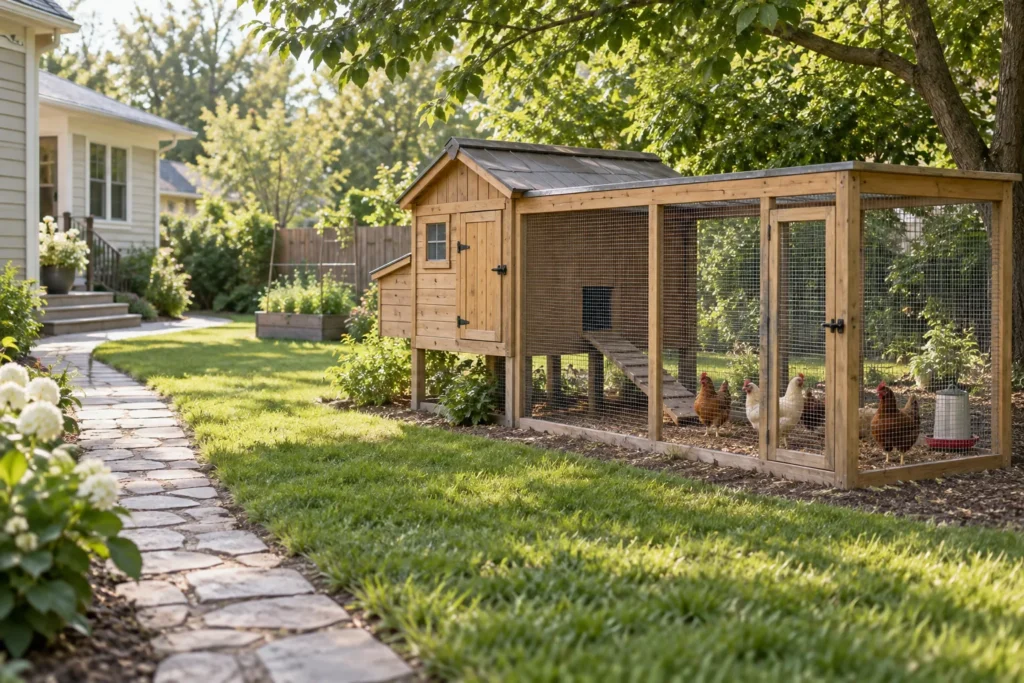
CHICKEN COOPS · CHOOSE THE SITE BEFORE THE PLAN
Where should you put a chicken coop? Start with a place where chickens are allowed, the coop and run fit, and rainwater drains away. Then check summer shade, shelter from driving wind, predator exposure and the route you will walk every day. The best spot is the one that works for both the flock and its keeper in your actual yard.
1. Check the rules and map the full footprint
Start with the local authority, council, municipality or homeowners' association that governs your property. Ask whether you may keep chickens, how many birds are allowed, whether a rooster is permitted, and whether the coop and run have different placement, height or permit rules. Measure from the feature named in the actual rule, such as a property line or neighboring dwelling. Do not use a distance quoted for another town as your own setback.
Sketch the house, property boundaries, gates, neighboring homes, drains, trees and any existing structures. Draw the complete coop-and-run footprint at the dimensions shown in the plan. Add space for roof overhangs, doors that swing open, cleaning access and a path for moving materials. The Poultry Extension housing overview specifically recommends checking ordinances, neighbors and the convenience of cleaning, watering and gathering eggs when choosing a site.
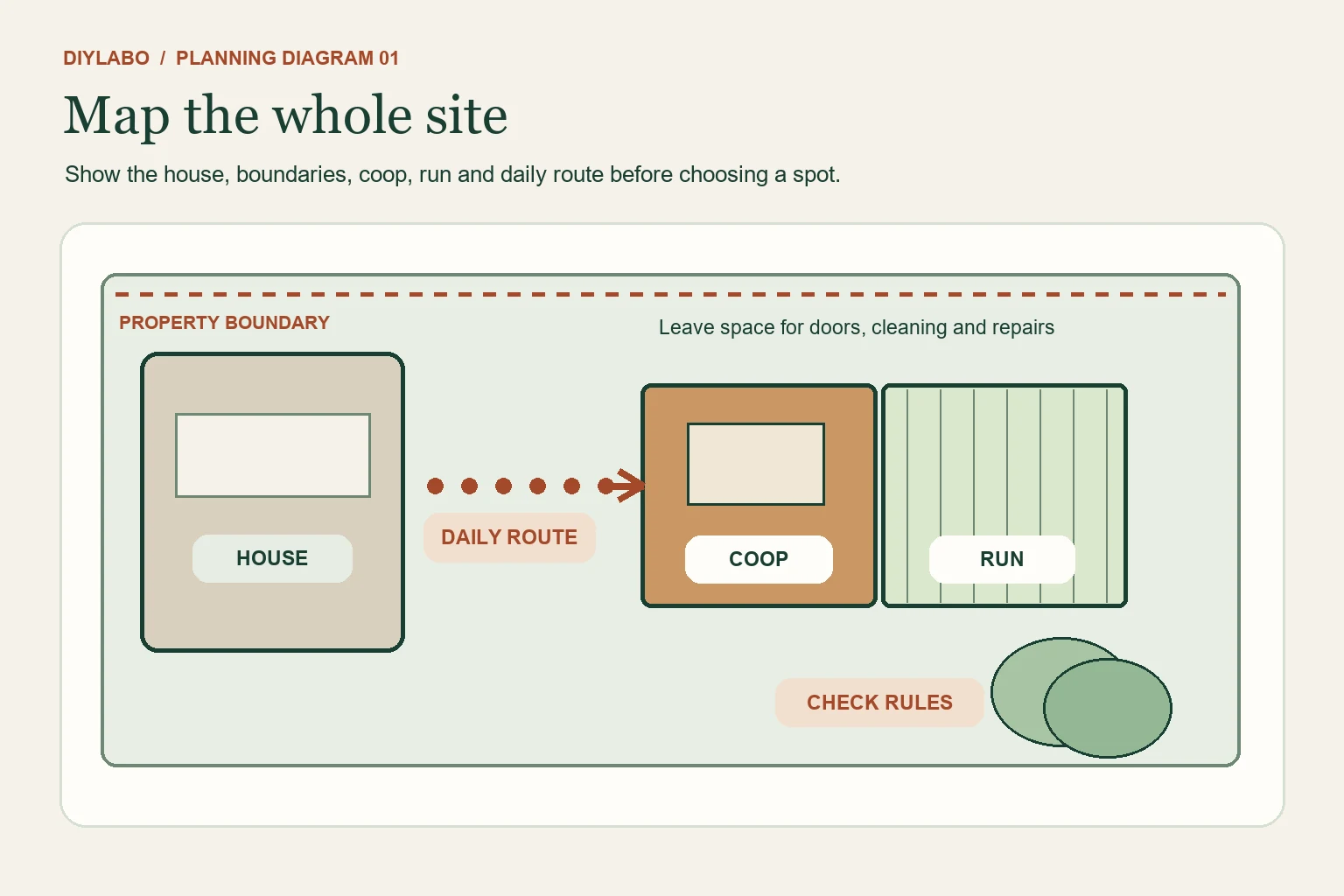
Place temporary surface markers where the corners would be. Stand at the proposed doors: can each one open, can you reach the run gate, and can you clean behind the structure? If the run just fits on paper but leaves no working space, test a different layout before buying a plan.
2. Choose ground that stays dry after rain
Visit each candidate location during or soon after a normal rain. Look for puddles, roof runoff, a natural water channel and soil that stays soft long after the rest of the yard dries. A flat-looking lawn can still be the low point of the property. The coop and run should not become the place where water from the house, path or neighboring ground collects.
Poultry Extension advises a high, well-drained site to reduce moisture in the coop and run. A raised platform in a wet hollow is not automatically a drainage solution for the surrounding run. If the preferred area is persistently wet, get site-specific drainage and foundation advice before committing to that position.
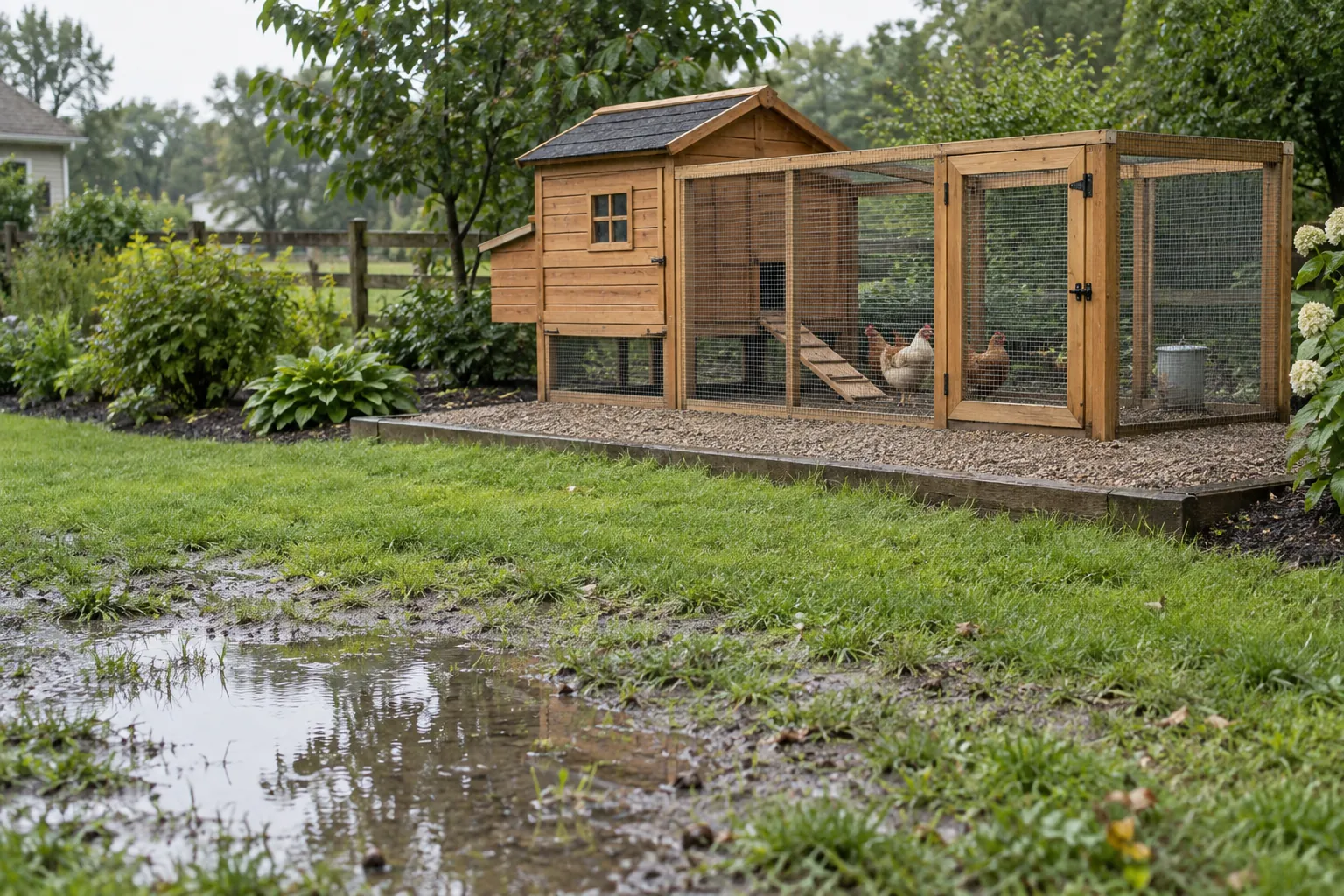
Check the route as well as the footprint. If reaching the coop means crossing a muddy strip with feed, bedding or a full water container, everyday care becomes harder. A firm, safe path matters even when the building itself sits on dry ground.
3. Observe afternoon shade, wind and driving rain
Watch the proposed run in the morning, at midday and during the hottest part of the afternoon. A tree that shades a fence at breakfast may cast its shadow beyond the run by 3 p.m. In a hot climate, make sure birds can actually reach shade and water when the yard is hottest. University of Arizona Cooperative Extension guidance identifies shade, water and ventilation as basic needs in extreme summer heat and recommends checking where shade falls throughout the day.
Notice which way strong wind and rain strike the yard. Place exposed doors and openings with that weather in mind, but do not seal the coop to stop every draft: ventilation still has to remove moisture and heat. Poultry Extension explains that both location and design affect airflow. A windbreak, secure weather protection and suitable vents work together.
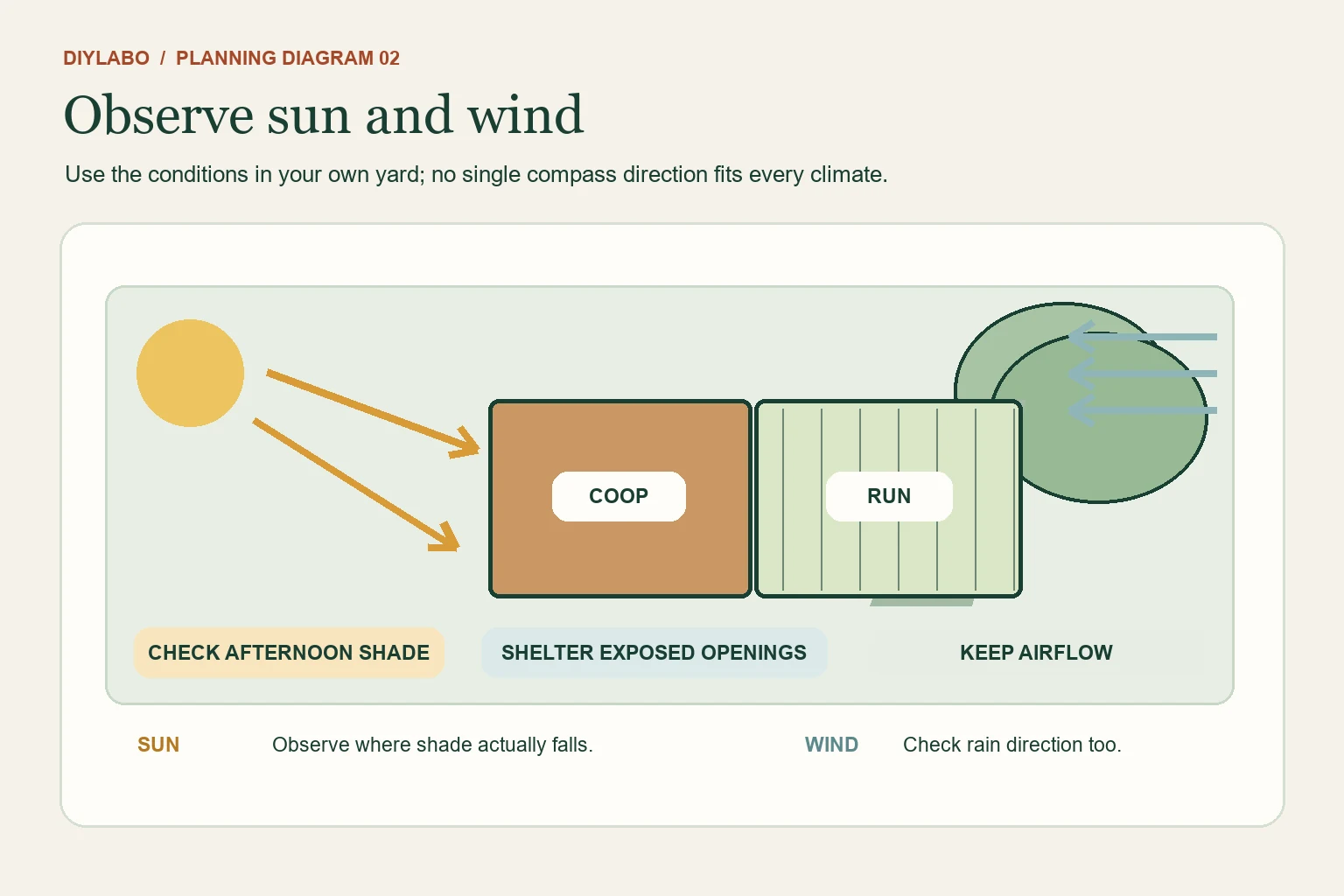
Be careful with universal advice to face the coop south. Sun paths and the useful side for winter light differ between the Northern and Southern Hemispheres, while local heat and prevailing weather may matter more than a compass label. Choose an orientation after observing the site. Keep the coop out from under dead or unstable limbs; trees can provide shade without standing directly above the roof.
4. Make daily care and protection realistic
Walk from the house to the proposed site carrying the equipment you will use: a water container, feed, eggs and cleaning tools. Repeat the walk in poor weather. A site that looks discreet from the patio may be inconvenient every morning. Position the human door, run gate and egg-collection access where you can reach them without crossing a slippery slope or squeezing behind shrubs.
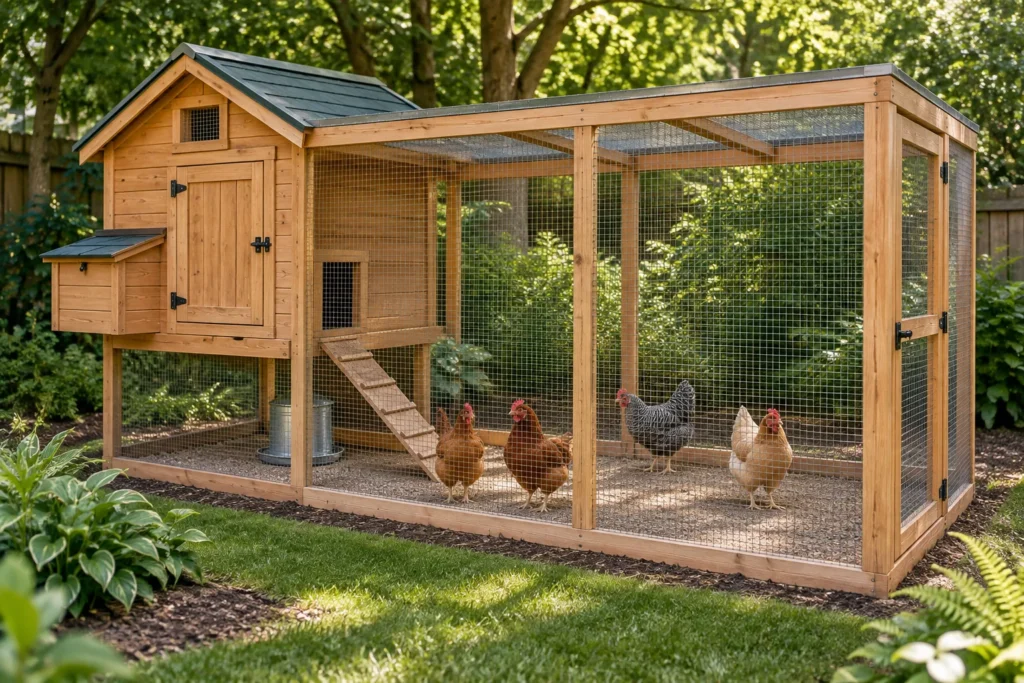
Look for hiding places and access points around the enclosure: dense brush against the mesh, loose materials beside the fence, gaps beneath doors or a run roof that will be hard to inspect. The siting decision does not replace a secure structure, but it should leave room to maintain its mesh, roof, latches and perimeter. Our backyard chicken coop planning guide covers the enclosure and day-to-day layout in more detail.
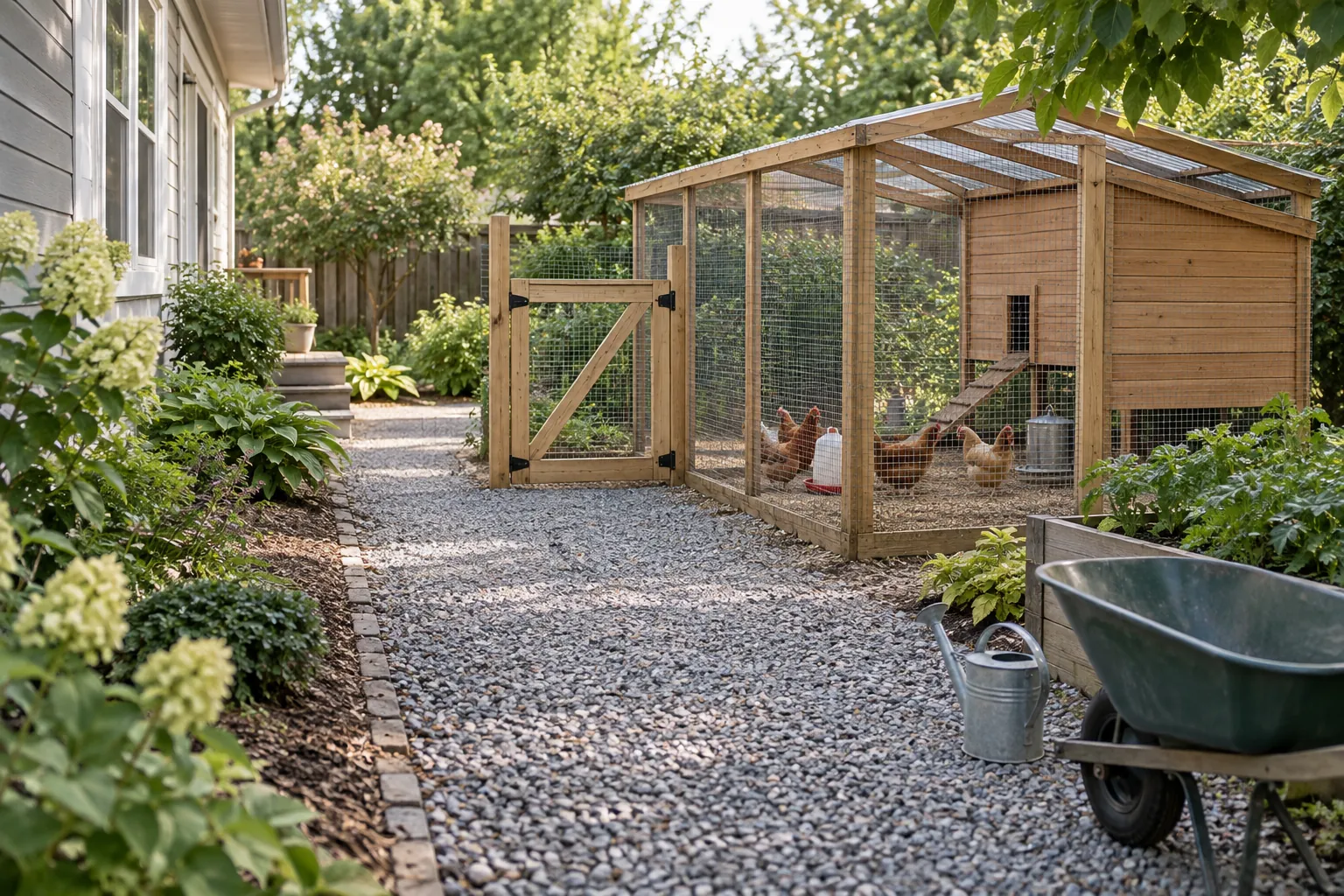
Think about neighbors too. Check where the run, feed storage and cleaning route sit relative to neighboring windows, patios and fences. The legal minimum is only the first test; keeping the area clean and making care easy are important parts of being a considerate neighbor.
5. Compare two locations before you build
Shortlist two possible positions and walk through the same checks for both. Do not score a site as “good” because it wins on sunlight if it fails a local rule or stays waterlogged. Treat legal placement and drainage as decisions to resolve first.
| What to check | What to record at each candidate site |
|---|---|
| Rules and full footprint | Allowed position, actual local setbacks, coop + run dimensions, door and maintenance space |
| Drainage | Puddles after rain, runoff direction, firmness of the route and proposed run |
| Summer conditions | Where shade falls at midday and late afternoon; where water can stay accessible |
| Wind and rain | Prevailing weather direction, exposed openings and planned ventilation |
| Daily care | Walking route, feed and water access, egg collection and cleaning access |
| Security and neighbors | Inspection access, nearby cover or hazards, relationship to neighboring spaces |
Take a photo of each site after rain and another during a hot afternoon. Record the date and the weather. Those observations are more useful than guessing from a sunny-day visit. Once you have selected a workable location, use the coop plan's actual dimensions to mark it out again before ordering materials or starting the foundation.
Common questions about chicken coop placement
How far should a chicken coop be from the house?
There is no reliable worldwide number. Check the rules for your property, including distances from the house, other dwellings and property boundaries. Within those limits, choose a location you can reach for daily care without putting the coop where runoff, noise or cleaning will cause problems.
Should a chicken coop be in sun or shade?
Birds need access to shade during hot weather, and a dry run benefits from some light. Check the shadow at the hottest time of day rather than choosing a site based only on morning sun. Make sure shade does not come at the expense of airflow or safe tree condition.
Which direction should the chicken coop face?
There is no direction that suits every climate or hemisphere. Review the sun path and prevailing wind and rain at your property. Protect exposed openings while keeping the ventilation the coop needs.
Can I place a coop under a tree?
A nearby healthy tree can offer shade, but check falling branches, root disturbance, runoff and whether the shade actually covers the run in summer. Avoid siting directly under dead or unstable limbs.
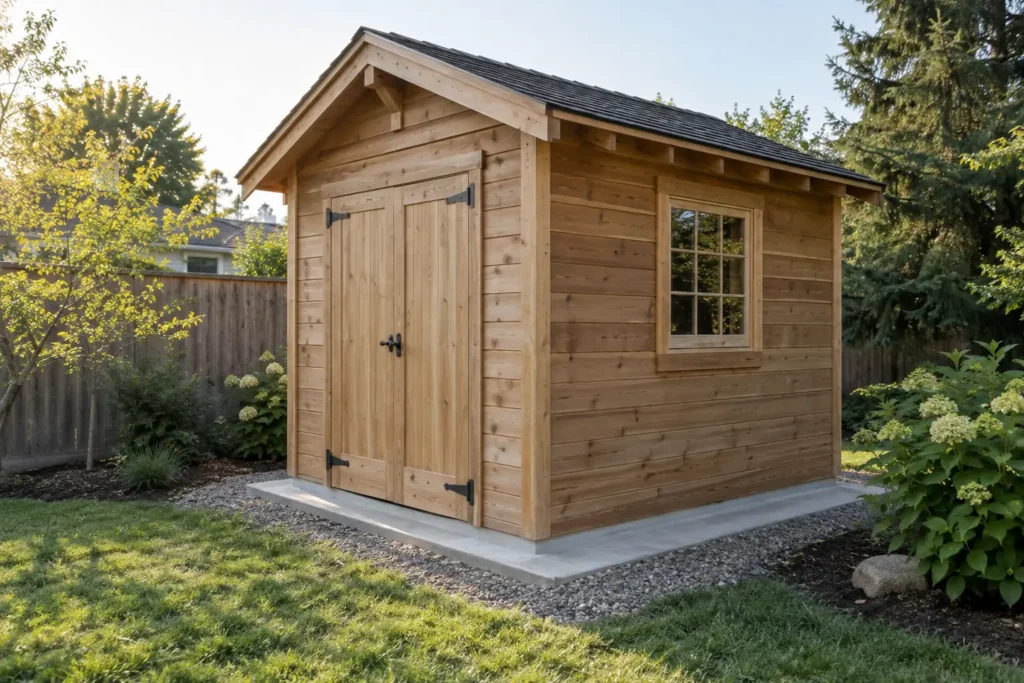
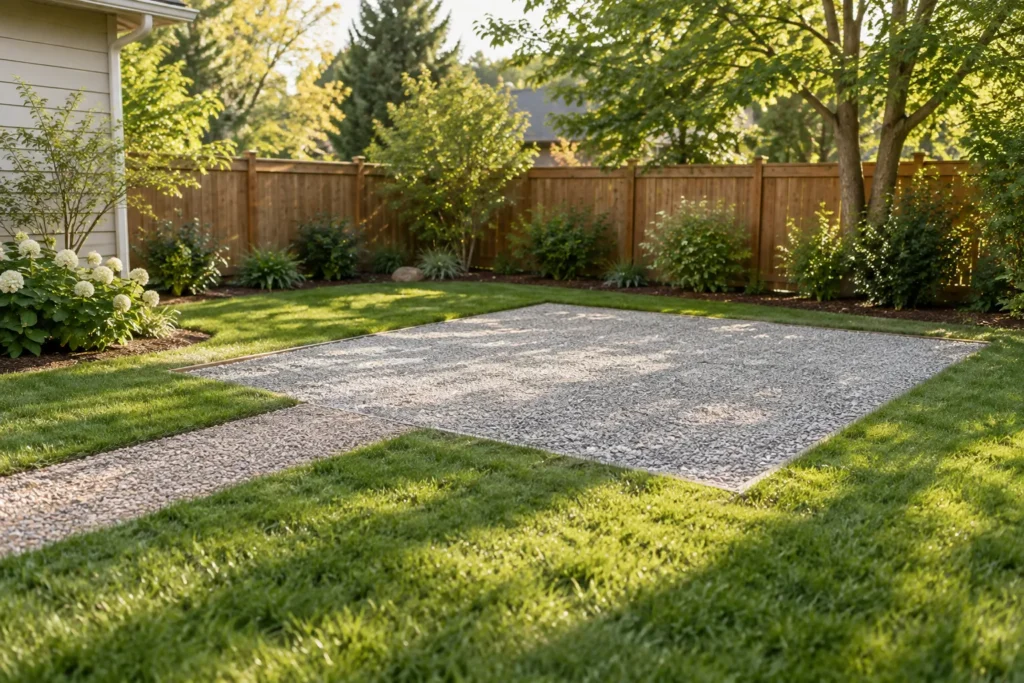
Images: original DIYLABO concept photography and planning diagrams. They illustrate site decisions; they are not measured construction drawings, legal setback diagrams or photographs of a completed DIYLABO customer project.
Keep exploring. Your next project starts with a good question.
More DIY Guides